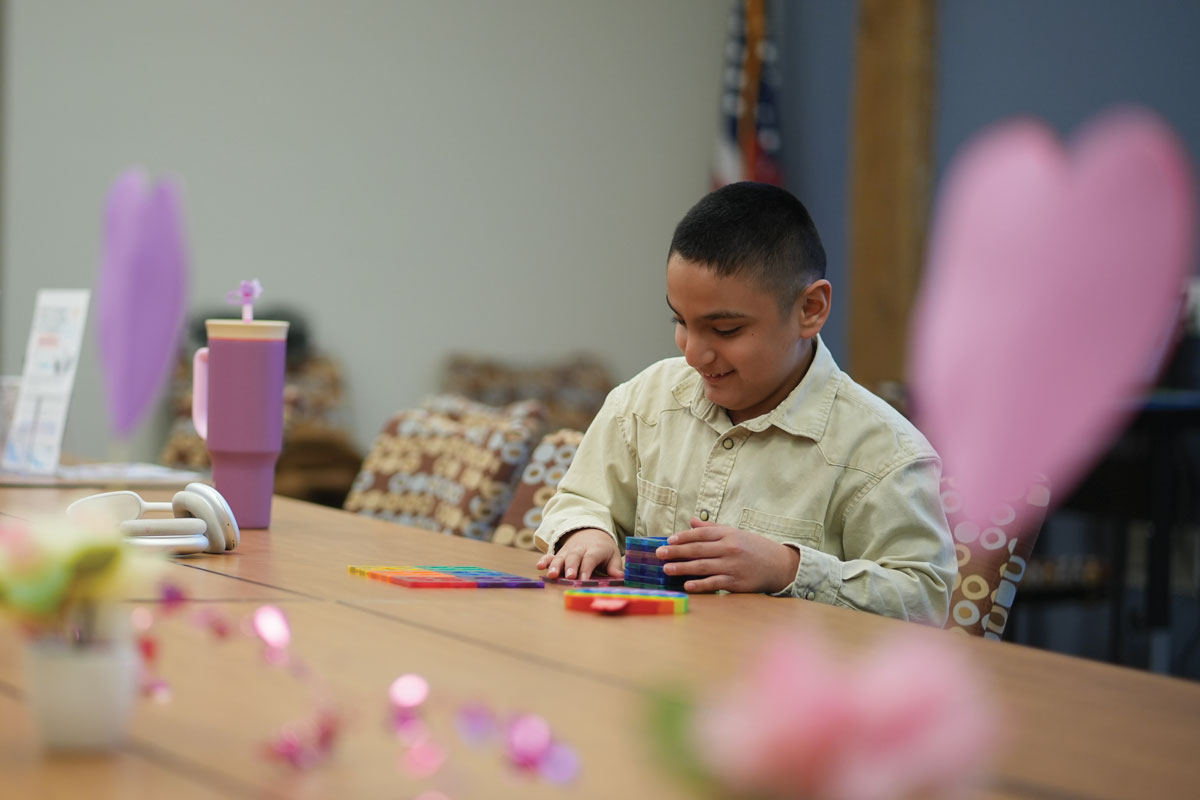
In 2021, as the world slowly emerged from the COVID-19 pandemic, Alba Jimenez, mother of three, needed some assistance. Her 23-year-old is neurotypical, but her 7-year-old and 9-year-old are both neurodivergent, having been diagnosed with autism and one with chromosome 9p deletion syndrome.
“I needed support as the mother of two children with disabilities,” she said. “In that moment, I had a lot of doubts and questions, and in this group, I found the answers.”
That group is ALAS, a nonprofit dedicated to supporting families of children and youth with diverse abilities through workshops, education, support groups, advocacy and more. ALAS launched in 1997 with the goal of providing resources and services for non- English-speaking mothers. Since then, it has served more than 40,000 families.
In January 2025, ALAS established an agency endowment fund, ALAS Community Legacy Fund, at the Greater Milwaukee Foundation.
“We wanted ALAS to have longevity, so investing in long-term goals was a priority of the board,” Elsa Diaz- Bautista, executive director of ALAS, said. “The Greater Milwaukee Foundation checked many boxes for us. It invests our money well, it’s here in the community and it helps other organizations similar to ours.”
Diaz-Bautista joined the nonprofit in 2014 after meeting the founder, Monica Lopez, at Disability Advocacy Day in Madison, Diaz-Bautista helped interpret for them. At the time, Diaz-Bautista was advocating on behalf of her daughter, who has developmental and cognitive disabilities.
ALAS is actively growing its endowment fund through conversations with partners and supporters who believe in the importance of community-based organizations.
Adjusting with the times
ALAS first became connected with the Foundation during the pandemic when it received $12,900 in grant support for its temporary food distribution program.
“We adjust with the times,” Diaz-Bautista said. “A food distribution program is not one of our core services, but at the time, there was a lot of food insecurity within our community and within our families … The Foundation is an expert at recognizing the need in the community and mobilizing to meet those needs.”
While the food distribution program is no longer active, ALAS’s core services remain. Currently, it actively serves 400 families.
Patricia Hernandez’s son has autism. The group helped her navigate how to get him an individualized education program and helped them both realize his capabilities.
“We learned that our children can do many things; they can do more than we can help them with,” she said.
Through ALAS, Rocio Leyva, who started as a volunteer, realized her son had undiagnosed conditions that the school hadn’t evaluated because of his behavioral issues. The group helped her advocate for him.
ALAS continues to advocate for programs that are beneficial to the disability community such as Wisconsin’s IRIS program (Include, Respect, I Self-Direct), a long-term care program with Medicaid for older adults and adults with disabilities, and the Supported Decision-Making Agreement, which provides an alternative form of guardianship.
Maria Barajas has been involved in the group for 20 years. She often brings her youngest son, Diego, to community events to help him gain a little independence. Diego, who was born with Down syndrome, prefers to stay home where he can color and draw.
“ALAS provides a lot of information and services, and if there’s something specific that our family needs, ALAS looks for that information for us,” Barajas said. “I urge families to learn more so they can be advocates. It’s for everyone, not just families with special needs.”