Across Milwaukee and Wisconsin, organizations are rethinking what good health and health care can look like — expanding who delivers it, who has access to it and what it takes into account. In 2025, the Greater Milwaukee Foundation and its donors provided over $7 million to organizations focused on health-related programs and projects. Here are three examples of physical health-related investments to organizations that are meeting people where they are and building something more whole in the process.
Wisconsin Doulas of Color Collective
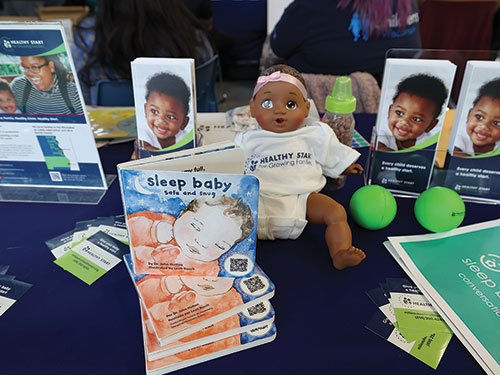
Walking into a doctor’s office or any health care institution can be daunting, but walking in to find a familiar face there makes it less so. The Wisconsin Doulas of Color Collective, which launched over a decade ago, is that familiar face for its clients.
A doula often advocates for their client while providing physical and emotional support and information. WIDOCC’s current roster has 15 doulas, whose services range from birth and postpartum to end of life and bereavement.
Executive Director DeAnna Tharpe explained that WIDOCC aims to increase awareness of doulas in Wisconsin while providing care and respite services for those doing the work. In recent years, providers have become more accepting and understanding of doulas, recognizing that they are there to assist.
When a doula is working with a client, they’re “on call” 24/7. Through WIDOCC, a doula can ask for backup during birth or call one another to decompress.
Since 2024, the Foundation has given WIDOCC $100,000 in grants. Through its workshops, WIDOCC focuses on reproductive health and reproductive justice for Black maternal health as well as “healing the healer.”
Bread of Healing Clinic
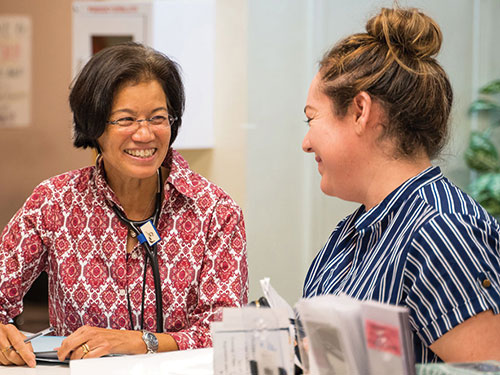
Bread of Healing Clinic doesn’t charge its patients, so they show their gratitude in other ways, from mangoes to warm tamales and more.
When the clinic first began in 2000, Barbara Horner-Ibler, medical director, physician and co-founder, didn’t anticipate it would exist two decades later. Over the years, the clinic’s services have expanded to include behavioral health, dental health and social work.
Its three locations provide free medical care and medications to uninsured and low-income adults. Experienced volunteer staff work with patients dealing with chronic conditions from diabetes to hypertension to high cholesterol.
Over the past 20 years, the Foundation and its donors have provided the clinic with more than $834,000 in support. The most recent grant supported clinic operations. The Foundation’s consistent partnership and willingness to support new initiatives helped launch the MedShare program in 2006, which provides medication to patients and subsidizes salaries for three part-time physicians to enhance continuity of care.
Legacy Home and Respite Care Foundation
Shanelle Snowden lost her mom to early onset dementia in 2016. After her mom’s passing, Snowden took a step back and realized the toll caregiving had taken on her and her family.
In June 2023, she launched Legacy Home and Respite Care Foundation, a nonprofit that offers educational and community support for caregivers with an emphasis on underserved communities and care rooted in culture and lived experience. Eighty-five to 90 percent of the caregivers it serves are Black or Latino. In 2025, it served 55 family caregivers.
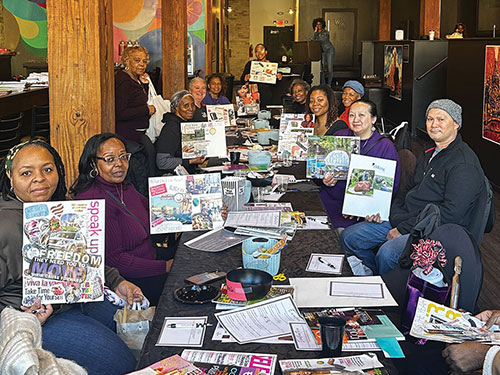
When the organization first started, many caregivers felt burned out. Here, caregivers can join support groups or take advantage of wellness opportunities, from yoga classes to art classes to fellowship, at no charge.
The organization received a $105,400 capital grant in 2025 to create the Caregiver Sanctuary, which is set to open in July 2026. Located on Milwaukee’s northwest side, the 1,500-square-foot space is in partnership with Progressive Medical Group, a family practice clinic, and Hayat Pharmacy. It offers a place for the group’s various services, including a place for caregivers to drop their loved ones off so the caregivers can have some self-care and respite.